Tag: Hydropower

  • Sealing Solutions for Hydropower Equipment – ​​​​Boost Turbine Dependability and Reduce Downstream Pollution

    Sealing Solutions for Hydropower Equipment – ​​​​Boost Turbine Dependability and Reduce Downstream Pollution

    For many years, Chesterton has offered hydropower facilities cost-effective hydraulic and pneumatic sealing solutions that ensure leak-free sealing and increased turbine efficiency. Worldwide, OEMs, operators, and refurbishment businesses rely on our incredibly dependable and high-quality products.

    In your cylinders, using a combination of high-performance seals and Chesterton-exclusive materials can significantly reduce total equipment costs, increase mean time between repairs (MTBR), and enhance operating performance. Our flexible manufacturing capabilities allow us to produce almost any design, any material, and any size seal with quick lead times for both molded and machined products.

    Chesterton delivers various sealing solutions for cylinders, turbines, and valves in this industry,​including:

    • Kaplan Blade Runners
    • Wicket Gate Cylinders
    • Servo Cylinders
    • Blade Pitch Cylinders
    • Brake and Jack Cylinders
    • Butterfly, Spherical, and Ball Valves

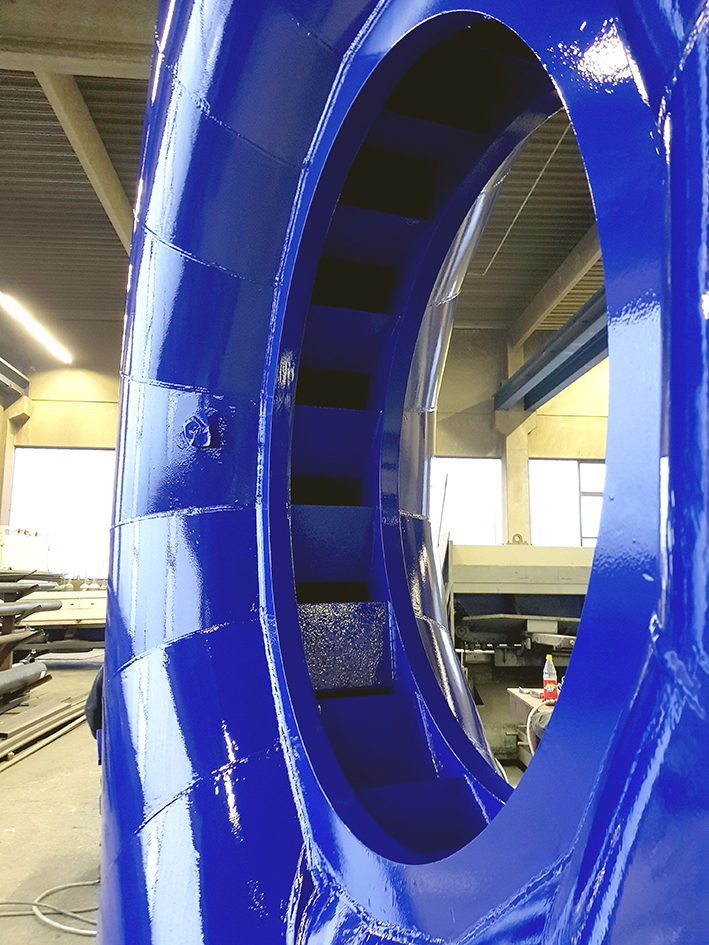
    Kaplan Turbine – Most common Type of Turbine in Hydropower

    The Kaplan turbine is an overpressure turbine. The guide vanes installed in front of the impeller create a swirl in the water. As the water flows through the water turbine, the force of the water acts on the guide vanes. This causes the impeller to rotate.

    In addition to the guide vanes, the blades of the Kaplan turbine are also movable and adjustable. This allows the angle of attack to the water flow to be changed. The guide vanes direct the inflowing water so that it hits the blades of the impeller at an optimum angle. This makes it possible to react optimally to fluctuations in the water supply and achieve a high level of efficiency even with a low water volume. Kaplan turbines are ideally suited for use with low heads and large fluctuating flow rates. The Kaplan turbine is therefore predestined for large, run-of-river power plants with low to medium heights of up to 80m.

    The Kaplan turbine has around 4 to 8 adjustable runner blades. The adjustability of the blades means that efficiency losses outside of nominal load operation can be kept to a minimum. At 30 percent to 100 percent of the nominal volume flow, the efficiency is around 85 to 95 percent. Therefore, it is no wonder that the Kaplan turbine – named after its inventor Victor Kaplan – has been shaping energy generation from hydropower for more than 100 years.

    Sealing Challenges

    There are many sealing challenges to overcome that are directly or indirectly associated with the equipment used to generate hydropower. Applying advanced sealing materials and designs can help address some of these challenges by:

    • Improving mean time between repairs
    • Simplifying installation
    • Reducing maintenance costs
    • Minimizing downtime
    • Positively impacting the environment

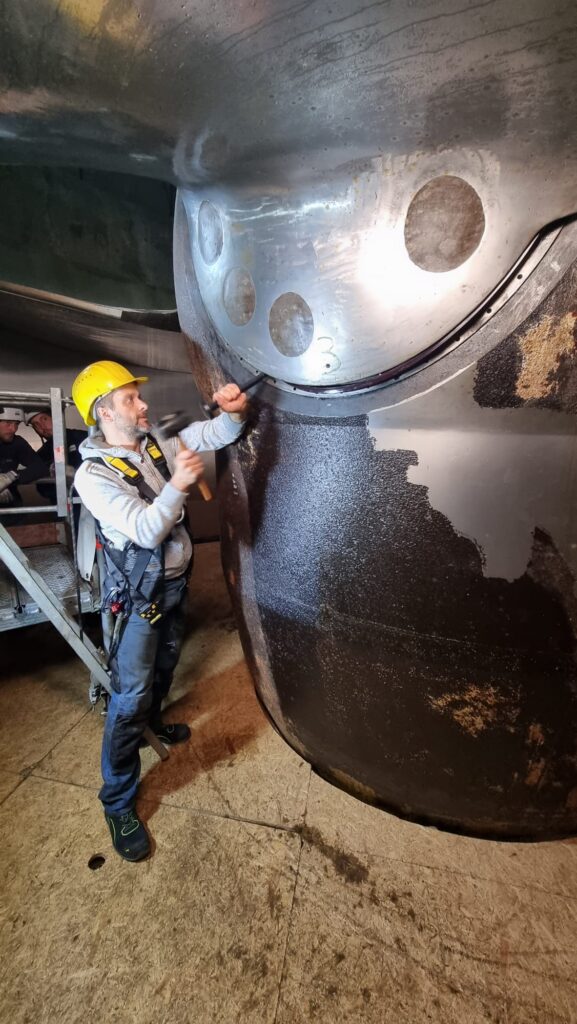
    Particularly with Kaplan turbines, runner blade trunnion seals are essential for preserving dependability, effectiveness, and shielding the surrounding area from oil seepage. More than 60% of Kaplan turbine leaks are caused by ineffective or failing blade trunnion seals, according to a survey done among owners of Kaplan turbines.

    Common Blade Runner Trunnion Sealing Issues

    There are several blade trunnion sealing challenges that need to be considered to establish optimal sealing reliability. They include:

    • Failure to keep water/contaminants out of the hub: Poor seal fit or poor seal design and seal material are most often the culprits, along with the impact of factors below.
    • Failure to keep oil in the hub: Also due to poor seal fit or poor design and seal material
    • Not accounting for blade droop: Due to manufacturing tolerances and running clearances of machined components, there is a certain (natural) droop of the turbine blades.

    A common bearing/bushing material for blade trunnion is cast bronze, which has a relatively low stiffness. This can lead to deformation of the bearing under high load, caused by the weight of the blade and by reaction force created on the blade during operation. Such bearing deformation will increase the blade droop value.

    The wearout of blade trunnion bearings is the third factor that can affect the blade droop value. When the blade oscillates, boundary friction arises if a stable oil-film between the trunnion and the bearings ring is not maintained. This, combined with a high radial load, might result in excessive wear of the trunnion/bearing assembly.

    Blade droop challenges the trunnion seals, changing the original cross-section for which the seals were designed. This must be compensated by the sealing devices as well. Blade droop can have a serious impact on performance, positive sealing, and seal life expectancy.

    Such geometrical changes can lead to:

    • Radial overload of the seals (in the direction where the seal cavity cross-section has been reduced)
    • Radial opening of the seals (in the direction where the seal cavity cross-section has been increased)
    • Excessive deformation and friction (wear out of sealing devices)

    How can you achieve optimal Runner Blade Trunnion Sealing?

    • Get exact turbine/blade measurements
      One of the most basic, but often overlooked aspects of selecting runner blade trunnion seals for Kaplan turbines is accounting for the wide variation in turbines and blades when determining the seal size needed. There are no technical specifications or internal standards for designing runner blade seal stuffing boxes. For this reason, and because as equipment dimensions change from the original specification after years of use, make sure you obtain actual equipment dimensions both by turbine and by blades.
    • Check the seal cavity cross section values around the blade trunnion
      It is important to understand that blade droop plays a factor in these measurements. The typical number of Kaplan runner is 4-8 blades. The natural wear of bearings and consequential blade droop values can vary blade by blade even with the same turbine. The seals should be designed and manufactured individually.
    • Check and resolve equipment conditions
      Surface conditions and the roughness of dynamic and static counter surfaces have to be considered. These uneven and abrasive surfaces can have an enormous impact on seal device performance and service life.
    • Consider operation/environmental conditions
      Fluctuation of turbine pressure – water head levels drop and rise, and can periodically change the pressure load on sealing devices. This can have an adverse impact on seal performance and reliability.
      Vibration and cavitation – a certain level of vibration and cavitation is standard to the operation of Kaplan turbines, this has a major impact on turbine components, including runner blade trunnion seals. Flexible seal design and elastic seal material can respond to such impact and withstand for a longer time.
      Low water heard schemes – Low water head can represent a high risk of abrasive environment caused by water contaminants, sediment, and mud. Using a seal with an abrasion-resistant thermoset polymer material can offset these abrasive effects.
    • Select the best runner blade trunnion seal
      Advanced hydraulic sealing technology can significantly improve meantime between failures, and reduce meantime to repair. The optimum seal also helps to reduce operational and maintenance costs, lower the risk of unplanned downtime, and lessen downstream pollution.

    Chesterton delivers the Ultimate Solution
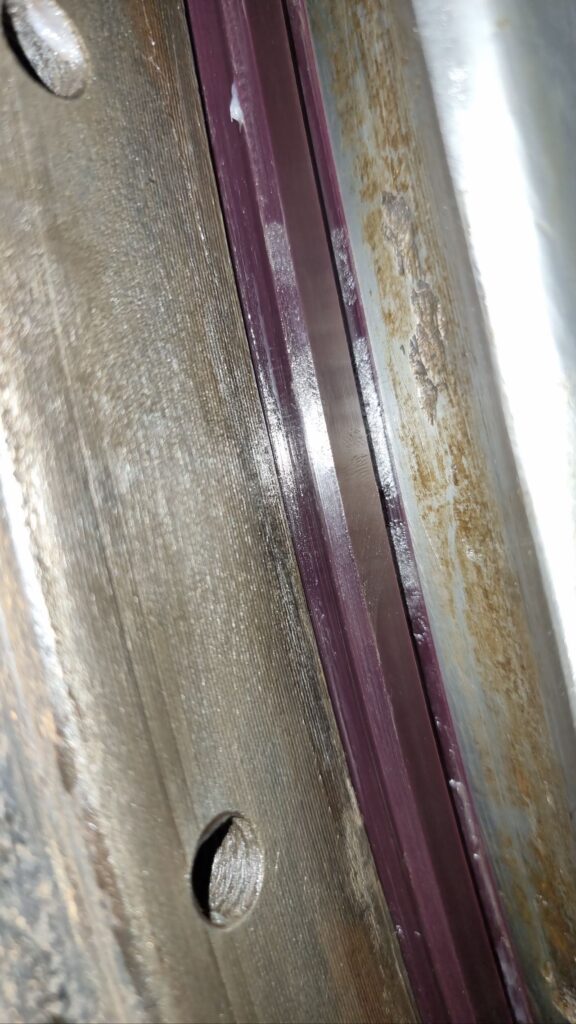
    Chesterton Kaplan Turbine Runner Blade Trunnion Split Seal

    High-Performance Split Lip Seal for Heavy Duty Rotary and Oscillating Applications

    Specifically for Kaplan Turbines, Chesterton invented innovative Kaplan Runner Blade Trunnion Split Seals – high-performance lip seals for heavy-duty, dynamic rotary and oscillating seals applications in the hydropower industry. These seals are specifically designed for the Kaplan (or “propeller Type” turbine runner blade trunnions.
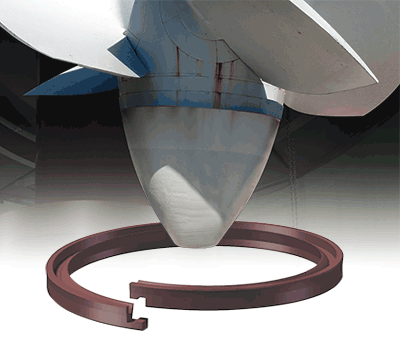
    The Runner Blade Trunnion Seal is just one of the fully array of Kaplan Turbine product solutions available from Chesterton.
    • Faster Installation & Increased Reliability
      Because to its split design, the seal can be installed quickly and easily, reducing downtime. The removal of the blade is not required for installation and there is no need for complex welding, gluing, or post processing of the split joint. Furthermore, instead of requiring a complete stacked set, just two seals need to be installed back-to-back. This configuration also keeps the hydraulic media and lubricant in the turbine hub, and protects the hub against ingress of water, solid particles and sediments.
    • Maintains Load Pressure & Rotary Shaft Movement
      The positive, flared dynamic lip design of the Chesterton Kaplan Runner Blade Trunnion Seal prevents the split from being pulled apart by rotating motion and uses load pressure to join the cut ends. During blade positioning, Chesterton’s seal maintains load pressure and allows for rotary shaft movement with minimal frictional drag.
    • Compensates for Blade Droop
      A typical reliability issue with an older Kaplan Turbine is blade droop caused by worn trunnion bushings. The Chesterton trunnion seal design compensates by providing reliable sealing despite any droop.
    • Durable Seal Material Offers Longer Life in Hydropower Environment
      This seal is comprised of Chesterton’s AWC800 high-performance thermoset polymer material, which has a proven record of withstanding harsh operating conditions and provides exceptional abrasion resistance and durability. To reduce frictional drag, the polymer contains a built-in molybdenum disulfide lubricant. Because of its superior memory, the seal can automatically adjust and correct for radial cross-sectional differences caused by blade droop.

    Conclusion

    The Chesterton’s 22KN5 Double Acting Kaplan Runner Blade Seals in Split Interlock configuration are considered as the most user friendly and ease installation sealing solution by worldwide end users comparing to other seals as traditional rubber seals or hot welded modern polyurethanes. Optimized, smart and precise design of the 22KN5 seals combined with high performance thermoset polymer material technology provides sealing, which does not need any glue bonding, welding or vulcanization process on site, making installation simple, fast and secure.
    Do you have questions about our specific Kaplan turbine solution?  

    You can find more interesting details and information in our White Paper.


    Please get more information about the mining applications of our sealing technology:

    In our blog, we provide information on sealing Kaplan turbines and troubleshooting leaks

    If you would like assistance selecting the best hydraulic seal solutions for your specific cylinder application, feel free to contact our Ask the Expert desk.

    You can also make a preliminary selection using our product selector. Our product consultants will gladly assist you in selecting the ideal product for your application.
  • Increased Performance and Reliability in Hydropower Plants with Chesterton Mechanical Seals

    Increased Performance and Reliability in Hydropower Plants with Chesterton Mechanical Seals

    The hydropower industry faces the constant challenge of making its systems more efficient while maximizing the service life of components. In this quest for maximum performance and longevity, selecting the right sealing technology plays a crucial role. This article highlights the compelling benefits of Chesterton mechanical seals in hydropower plants and shows how this innovative technology can contribute to sustainable optimization.

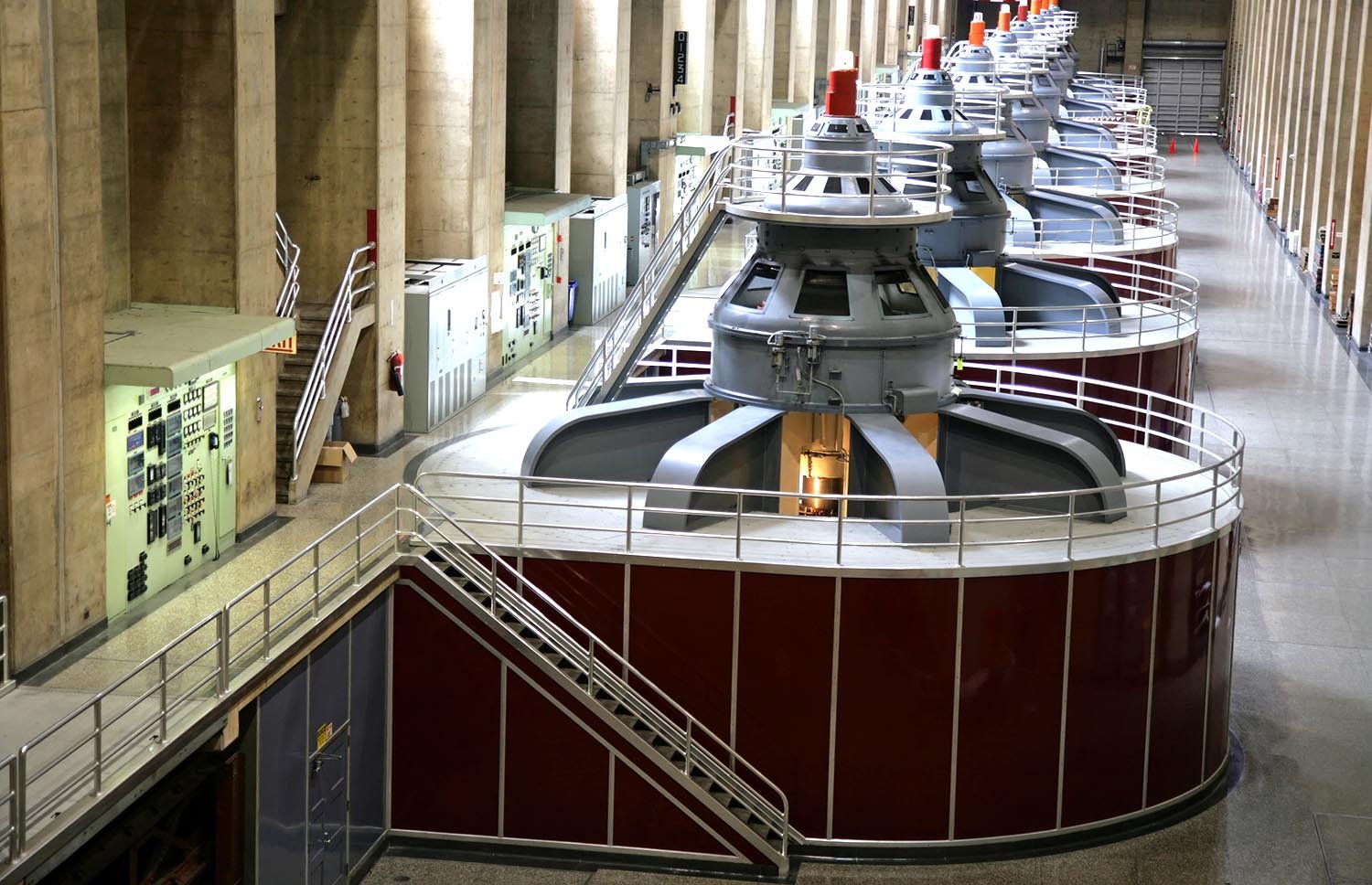
    Mechanical seals are critical components in hydropower plants, responsible for sealing pumps and turbines. Chesterton mechanical seals are characterized by their advanced design and material composition. These seals are specifically designed to withstand the extreme conditions found in hydroelectric environments while providing a reliable seal.

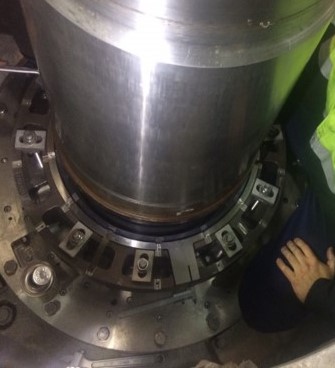
    Many factors affect reliable turbine main shaft sealing. Shaft size, turbine speed, pressure, water sediment content, start-up conditions, cavitation vibration, and other factors will impact seal selection and the long-term success of the sealing device.

    Large Turbines create Large Sealing Problems

    One of the main challenges in hydropower plants is minimizing leakages in the turbines. Conventional main shaft turbine seals typically leak heavily and can cause considerable shaft damage. They also require clean, filtered water that is flushed within the seal to prevent solids from embedding between the sealing elements and the sleeve. The reliability and service life of your seal is directly dependent on the continuous operation of the filtration systems. They must be able to continuously supply filtered water to overcome seal leakage and pressure conditions.

    The use of filtered water is extremely expensive. The stations’ drainage systems can overflow, which requires constant monitoring. The filter systems require regular maintenance, all of which leads to immensely high costs. In addition, the constantly flowing water causes severe corrosion damage to the metal parts.

    Chesterton split seals are designed to seal leak-free. With our innovative technology and sealing materials, we can deliver superior sealing solutions that meet the dynamics of your operation and develop reliable, long-term solutions that significantly reduce filter water requirements.

    The Chesterton Solution for Reliable Sealing with Considerably Reduction of Flush Water

    One of the biggest issues in developing a reliable seal solution for water turbines is keeping sediment and sand out of the seal so the particles don’t clog or wear out the seal or equipment. Based on our many years of experience in the hydropower sector, we have found an effective solution to this problem.
    We combine our advanced split seals with SpiralTracTM technology to eliminate solids from the sealing environment and significantly reduce or eliminate the flush water requirements for turbine mainshaft seals. Controlling the adverse conditions under which the seal typically operates enhances the reliability of your sealing system and reduces operational costs.

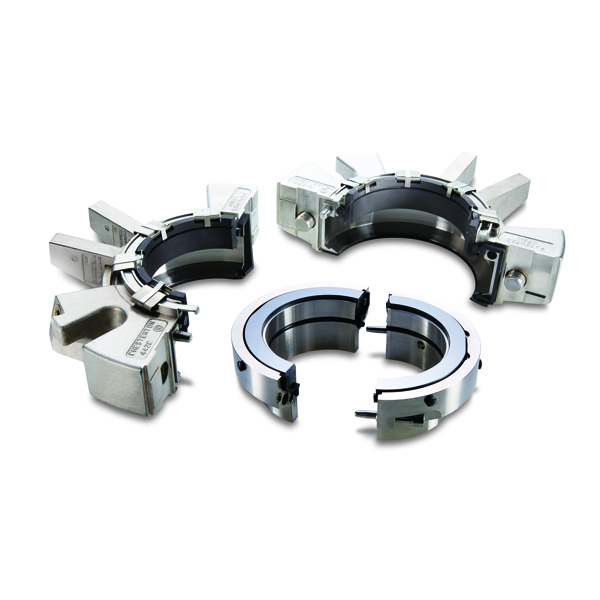
    Chesterton’s innovative 442 split mechanical seals deliver a radically different level of sealing sophistication for hydropower plants around the globe. 

    A split seal has components split into two equal halves, which are secured as one unit on the seal shaft. The major advantage of the split seal design is that it allows you to install the seal with no dismantling of the pump (or equipment)—an enormous time-saver! Chesterton’s split seals offer virtually leak-free performance. This leads to improved safety and environmental compliance and nearly eliminates sleeve wear, and flush water usage, among many benefits.

    Adaptability to different operating conditions

    The versatility of Chesterton mechanical seals allows them to adapt to different operating conditions in hydropower plants. Whether the pressures are low or high, whether the plant is operated continuously or intermittently, these seals provide a reliable seal and thus contribute to the stability of the overall system.

    Contribution to sustainable energy production

    By reducing leakage, protecting against wear and adapting to different operating conditions, Chesterton mechanical seals make a significant contribution to sustainable energy production. The optimization of hydropower plants leads to increased efficiency and helps to minimize the environmental footprint of energy production.

    Conclusion

    The application of Chesterton mechanical seals in the hydropower industry is a pioneering step towards improving performance and reliability. The reduction of leakage, protection against wear and the adaptability of these seals make them a key component for the sustainable development of hydropower plants. At a time when the search for environmentally friendly and efficient energy sources is paramount, Chesterton mechanical seals are helping to cement hydropower as a viable solution for the future.


    On our Chesterton Blog “Reliability Matters”, you can find this interesting article about Turbine Shaft Sealing with our Split Seal Technology.

    You can also make a preliminary selection using our product selector. Our product consultants will gladly assist you in selecting the ideal product for your application.

  • Optimization of Hydropower Plants with Chesterton Coatings: A sustainable Solution for higher Efficiency and longer Service Life

    Optimization of Hydropower Plants with Chesterton Coatings: A sustainable Solution for higher Efficiency and longer Service Life

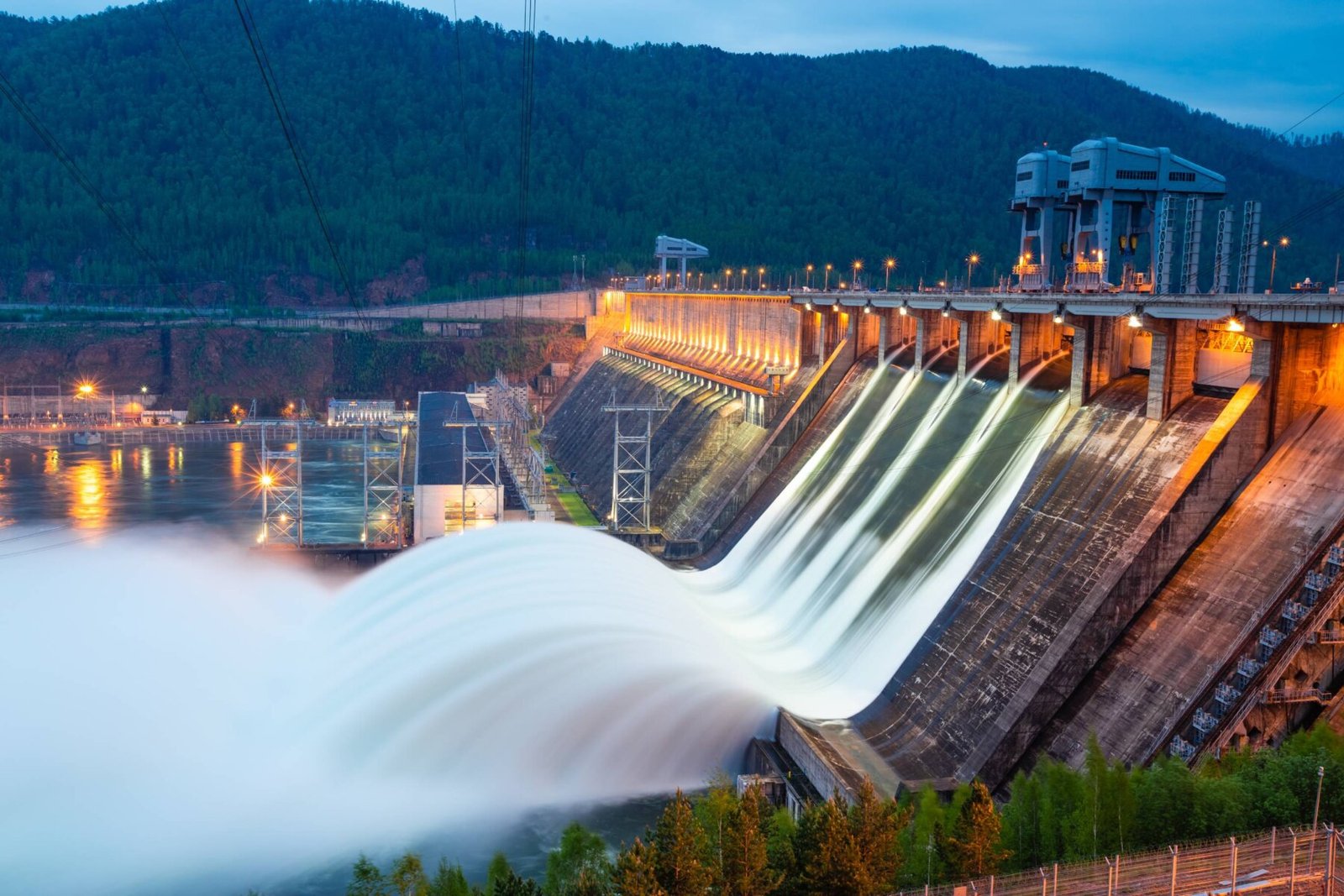
    Many cubic meters of water shoot through the pipes, turbines and filters of a hydropower plant every second. Although these components are very durable and specially designed for constant contact with water, corrosion damage is inevitable over time. As hydropower plants are not usually shut down completely, systems and equipment need to be overhauled gradually when necessary. It can take years to refurbish a hydropower plant. High-quality protection systems are therefore crucial to ensure a long service life for the plant.

    Protective coatings can protect various components and equipment from deterioration and if suitably selected and applied, can ensure decades of smooth operation of hydropower plants. They act as a protective barrier against corrosion, erosion and cavitation, extending the service life of operating equipment and reducing maintenance costs.

    Another advantage of Chesterton’s protective coatings in hydropower plants is that they create a smooth surface over which water can flow easily. This is particularly important for turbines, where a smooth surface means optimization of the flow conditions of the water and thus an increase in hydraulic efficiency. The result is increased power generation at lower operating costs.

    Extreme environmental conditions – high demands on the coating systems

    The high flow velocities of water combined with friction from entrained solids such as mud, gravel and sometimes even pieces of ice require an extremely abrasion resistant protective coating.

    Very low water temperatures with ice formation in winter or permanent exposure to sunlight for exposed components require flexible temperature resistance or UV resistance of the coatings.

    With the ARC and Ceramic-Polymer coating lines, Chesterton offers high-quality protection systems specially tailored to meet the requirements of the different areas of application in the hydropower sector.

    Chesterton high-performance coatings – protection against corrosion, erosion and cavitation

    With the ARC and Ceramic-Polymer range of coatings, you get unique solutions that have been proven to increase the reliability and performance of machinery and equipment, maximizing the efficiency of hydropower components.

    The intake structures filter and divert the water for the turbine. The intake systems, such as shut-off devices, bar screens, plenums, valves and penstocks, have large volumes of water flowing through them, sometimes with a high proportion of entrained solids. Chesterton specializes in protecting these systems from premature damage and maintaining maximum efficiency with high-performance coatings.

    The turbine is the heart of a hydropower plant. To ensure reliable and efficient operation of the guide vanes, volute casing, turbine blades and draft tubes, these surfaces must be resistant to erosion and cavitation over long periods of time due to the long operating times in this industry. Requirements that the Chesterton Coatings series fully meets.

    We provide effective solutions for protecting and rebuilding plant metal and concrete infrastructure and equipment that is subjected to corrosion, wear, and environmental damage.

    Our low-VOC, 100% solids, protective coatings are engineered to offer long-term protection to hydro station components and equipment including:

    • Trash racks and stop logs
    • Penstocks and valves
    • Turbine components
    • Spillways
    • Concrete structures
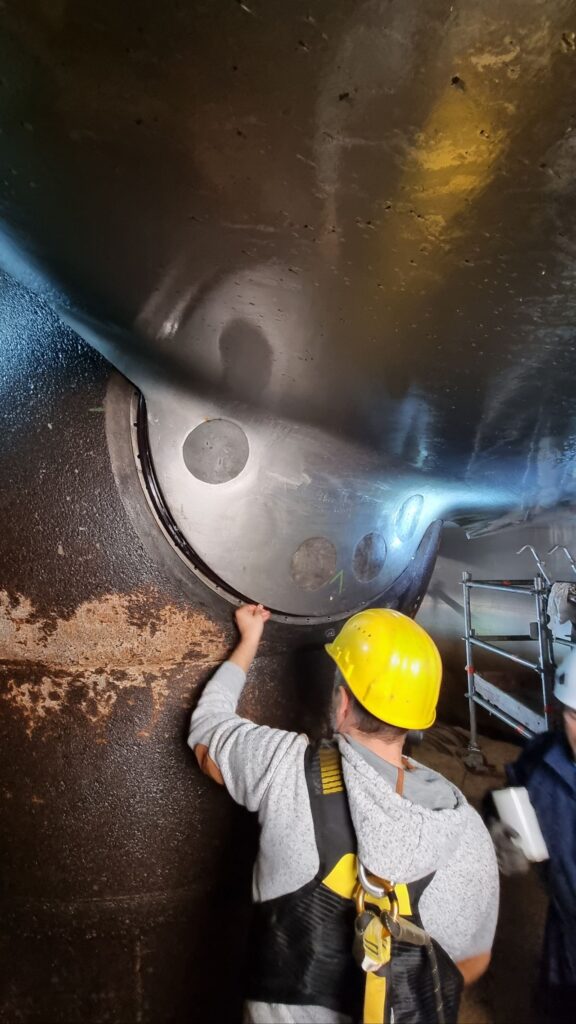
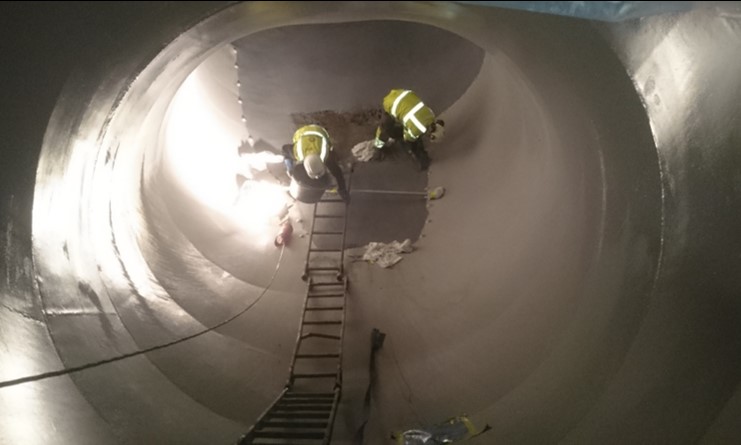
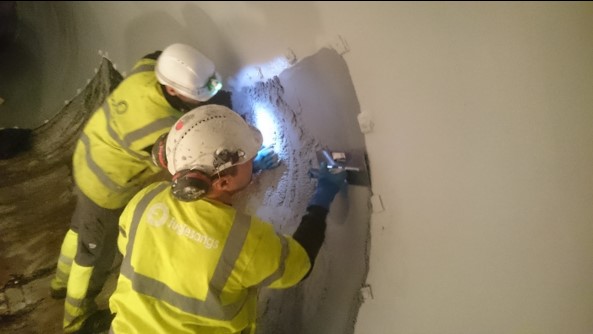
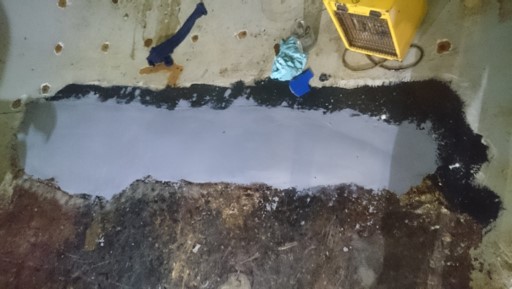
    Repairing of Draft Tube with ARC 791

    Proven coating experiences for your success

    Choosing the right coating system depends on several factors, including the type of plant, the environmental conditions, the type of surfaces to be protected and other specific requirements. It is important to carefully analyze the requirements of your hydropower plant before coatings are selected and applied. With our versatile portfolio of high-performance coatings, we can help you make the right choice of protection system.


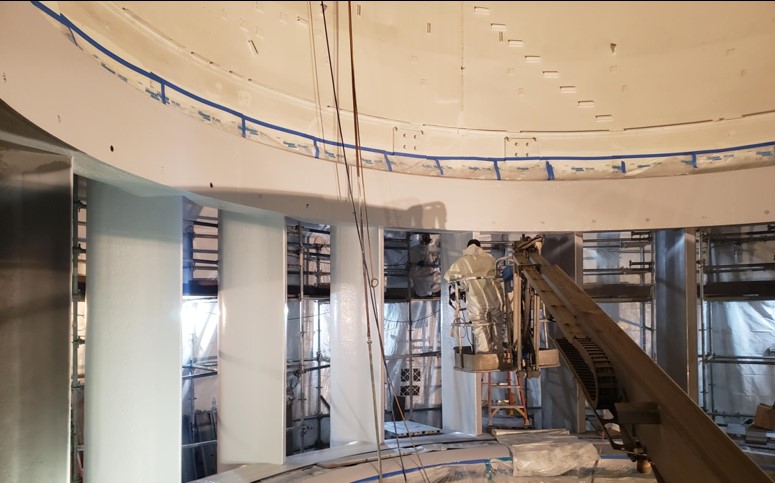
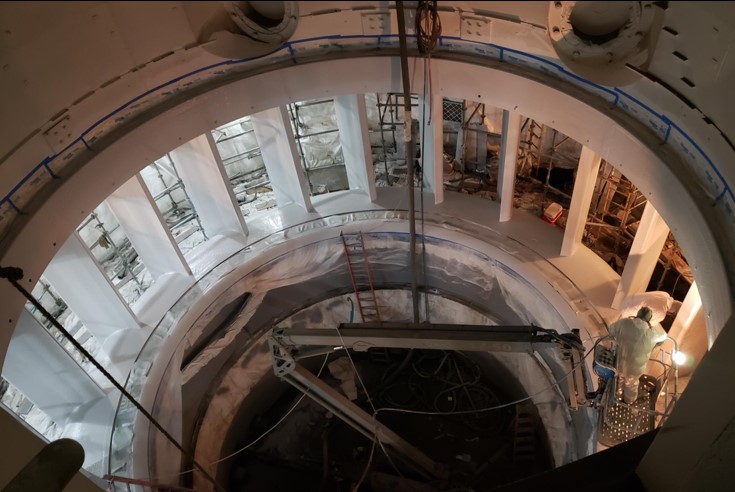
    Case Study #1 – Wicket Gates Protected with ARC S1HB

    • Our customer was seeking a single layer Ultra-High-Build coating to repair and protect the 45 & 60 year old stay vanes.
    • A total surface area of 400 m2 (4400 sq ft) had to be coated.
    • Our high-performance coating ARC S1HB, 100% solids, 0% VOC, could be applied by spray application in a single layer with a thickness of at least 3mm (120 mils).
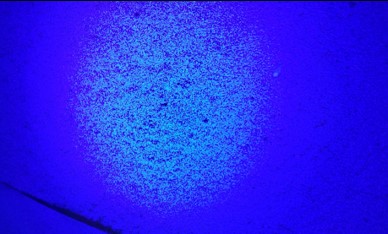
    • Another special feature of this coating system is that it contains fluorescent pigments, so that a continuous holiday free application can be easily checked with UV light as it is being applied.
      It is a non-destructive visual QC for both wet and cured ​coatings.

    Result of this successful project:

    • 3 mm (120 mils) of Chesterton ARC S1HB coating was applied in 12 hours to 400 square meters (4400 sq ft). 
    • Our customer praised the 0% VOC and odorless factors. Previously, a vinyl coating containing 85% VOC and posing a safety risk was used for the stay vanes.
    • The foreman and his team were positive about the ease of application of Chesterton ARC S1HB.  They said it was the best high build coating they had ever sprayed.  They pointed out the advantage of carrying out visual quality control under UV light.
    • The Chesterton ARC S1HB coating will protect the blades of the turbine at the Ice Harbor dam from erosion and corrosion for many years.

    Please see the case study on our Website:

    Case Study 601453 – Wicket Gates Protected with ARC S1HB


    Case Study #2 – Draft Tube Repair with ARC 791

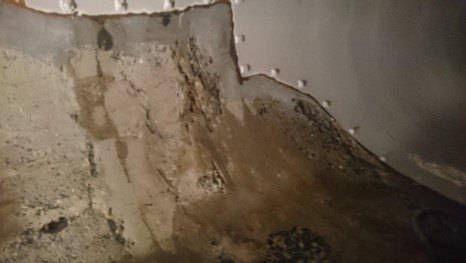
    • The draft tube is made out of concrete (sometimes also in solid rock), covered with bolted steel plates. These are also welded together to form a solid construction.
    • The diameter of the tube depends on the size of the turbine, often up to 4-5 meters.
    • Large amounts of water (up to 50m3/sec) lead to heavy hydraulic forces and vibrations inside the draft tube, which often causes the steel plates to loosen in exposed area and pieces can fall off causing damage to equipment further downstream. To repair it with new steel plates is a very time consuming and costly job, and in most cases will not last.
    • To inspect this area, they need to stop the turbine and empty the draft tube.​ Today it is also an option to do 3Dscanning.​ In both cases, it is a very costly operation, especially concerning loss of energy production.

    Result of this successful project:

    • Solid material, coated directly to the base.​
    • No need for bolting​.
    • No risk for mechanical distortion​.
    • No risk for «air-pockets»​.
    • No additional surface treatment​.
    • Easier and quicker repair​.
    • Less downtime, security of power supply and increased income for the plant owner.

    Please see the case study on our Website:


    Case Study 351041 – Power Plant Draft Tube Repaired and Protected with ARC 791


    Case Study #3 – Coating of Lock Gates and further Components of Corumana Dam in Mozambique

    • The corroded lock gates and further components like linkages, lashing strips and gate wheels, were refurbished with our high-performance coatings.
    • Proguard CN 200 was applied on all metal components
    • The metal parts, which are exposed to air and sunlight were additionally coated with Proguard 169, our UV stable topcoat

    Result of this successful project:

    • Easy application in one layer
    • Reliable and durable protection against corrosion in aggressive marine environments according to ISO 12944-2 / classification CX
    • High-grade resistances against high mechanical friction
    • Best temperature and humidity resistance due to the changing humid climate in Mozambique

    Please see the case study on our Website:

    Ceramic-Polymer Newsletter – Coating of Lock Gates and further Components of Corumana Dam in Mozambique


    Conclusion

    The application of Chesterton coatings in the hydropower industry represents a forward-looking solution to increase efficiency and extend the service life of equipment. By protecting against wear, corrosion and reducing friction, these coatings not only contribute to cost efficiency, but also promote sustainability in energy production. The hydropower industry can therefore benefit from the many advantages of this innovative technology and make a contribution to the global energy transition.

    We gladly help you in any question regarding surface protection. Please ask our Expert Desk for further information.

    Furthermore, on our website you can find this interesting blog article:
    https://blog.chesterton.com/wear-protection/industrial-coatings/coating-corrosion-hydropower-facilities/

    You can also make a preliminary selection using our product selector. Our product consultants will gladly assist you in selecting the ideal product for your application.

  • Reducing maintenance on turbine shafts sealed with compression packing

    Reducing maintenance on turbine shafts sealed with compression packing

    Hydro turbine shafts are sealed using various sealing methods. One of the traditional methods of sealing turbine main shafts is compression packing. Compression packing has several advantages over alternative sealing methods:

    – Relatively simple technology
    – Non-catastrophic failure
    – Low initial cost

    Many hydro turbines in operation today are still sealed with compression packing, besides the other technologies that are available and used. Unfortunately, compression packing has some disadvantages as well:

    – Maintenance intensive – retightening and frequent replacement
    – Leakage – compression packings are generally not hermetically sealed and, on a rotating shaft, require some leakage for lubrication and cooling.

    Packings can be replaced by other methods, but this can be costly and sometimes technically infeasible. A.W. Chesterton Co. has developed technology to overcome the disadvantages of packing. This technology reduces maintenance, extends MTBR and reduces downtime and costs.

    1. Compression packing technology

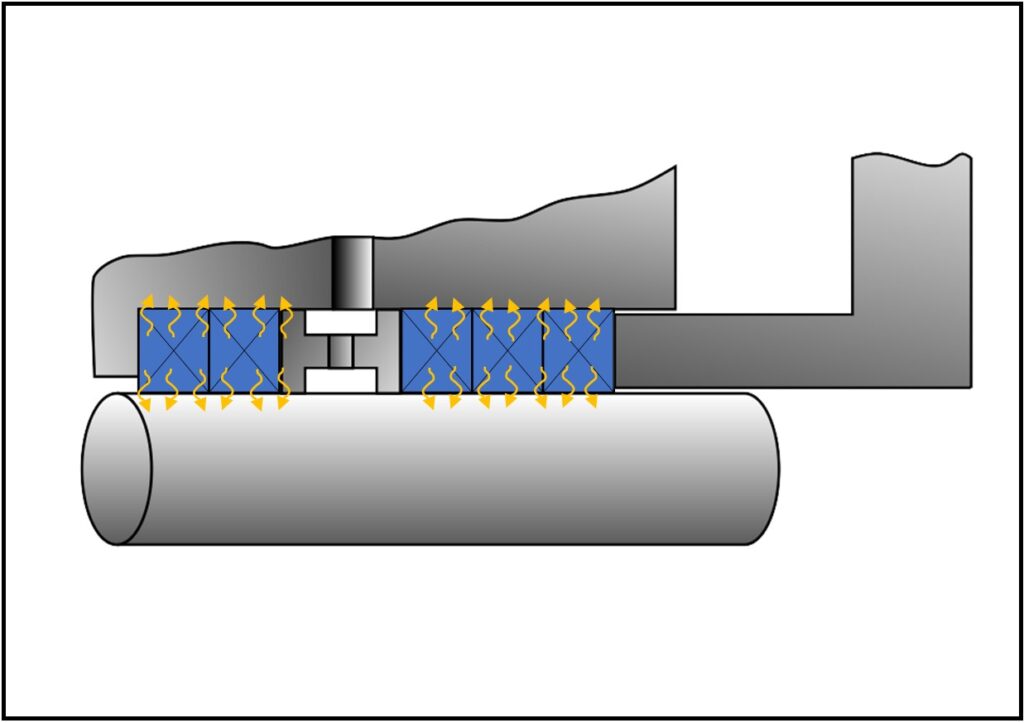
    Let us take a look at the technology behind compression packing. Compression packings are braided from synthetic or natural fibres and they are filled with lubricants and blocking agents. These lubricants are usually mineral or synthetic oils or greases. PTFE suspension is also a commonly used lubricant. Lubricants have a dual function. They reduce friction between the shaft and packing, but also act as a blocking agents to prevent water from seeping through the packing braid structure. Packing rings are installed in a cylindrical shaped chamber called a stuffing box (figure 1).

    Figure 1: The working principle of compression packing

    Typically 4-6 rings of packing are installed in the stuffing box. The gland follower on this stuffing box is used to compress the packing rings. This follower creates an axial force on the packing rings which is converted into a radial force in the packing rings. This radial force is the force that creates the seal. Because lubricants slowly disappear from the packing (because they are squeezed out) and because the packing rings are subject to wear, the gland follower must be retightened from time to time. The frequency of this retightening requirement will vary depending on the application. It can vary from daily to monthly.  Therefore, compression packing is by nature a maintenance intensive sealing method. Eventually, the lubricant will be used up and the packing will be worn to the point where it needs to be replaced.

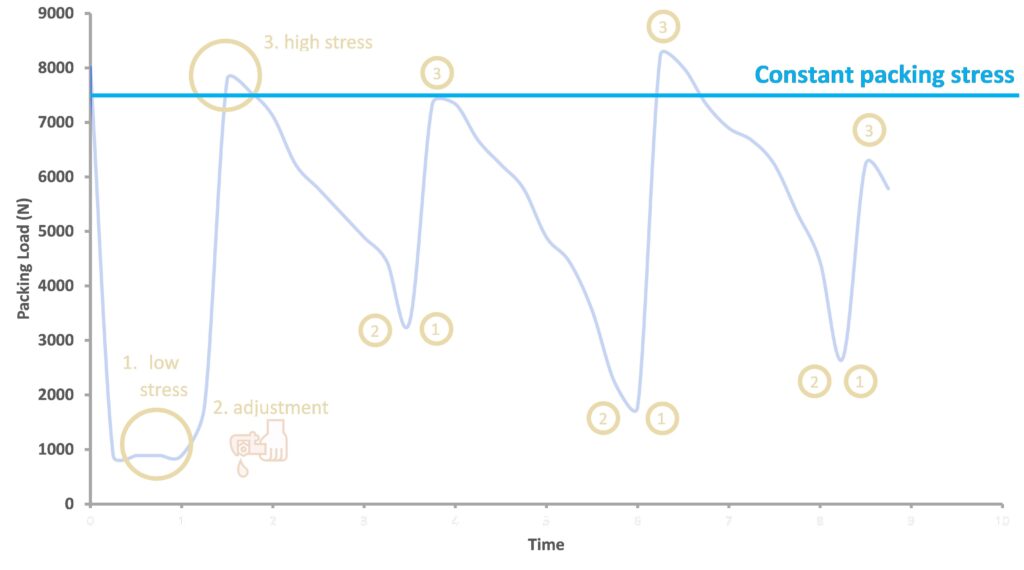
    If we plot this retightening process on a graph and look at the packing stress versus time, we get the following graph (figure 2).

    Figure 2: Maintenance cycle of a standard stuffing box

    This maintenance cycle illustrates a number of issues associated with the use of compression packing:

    1. At the points where packing stress is low, solids in the sealed liquid can penetrate between the packing and the rotating shaft, wearing both the shaft and the seal, therefore further reducing packing life and potentially causing equipment damage.
    2. Frequent adjustments make the use of compression packing labour intensive
    3. The sealing stress is high at the peak of the maintenance cycle. Maintenance personnel tend to over-tighten the packing in an attempt to extend the time between adjustments. Unfortunately, this has the opposite effect because the packing suffers of additional wear and more lubricant is squeezed out. Therefore this shortens the life of the packing even further.

    It would be more beneficial to maintain a constant moderate load on the packing. This would eliminate or reduce all of the above problems (figure 3).

    Figure 3: Ideal load management on compression packing

    2. Chesterton offers the optimum solution

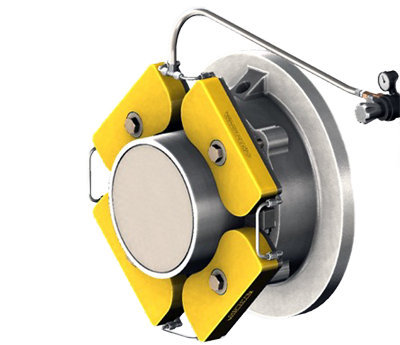
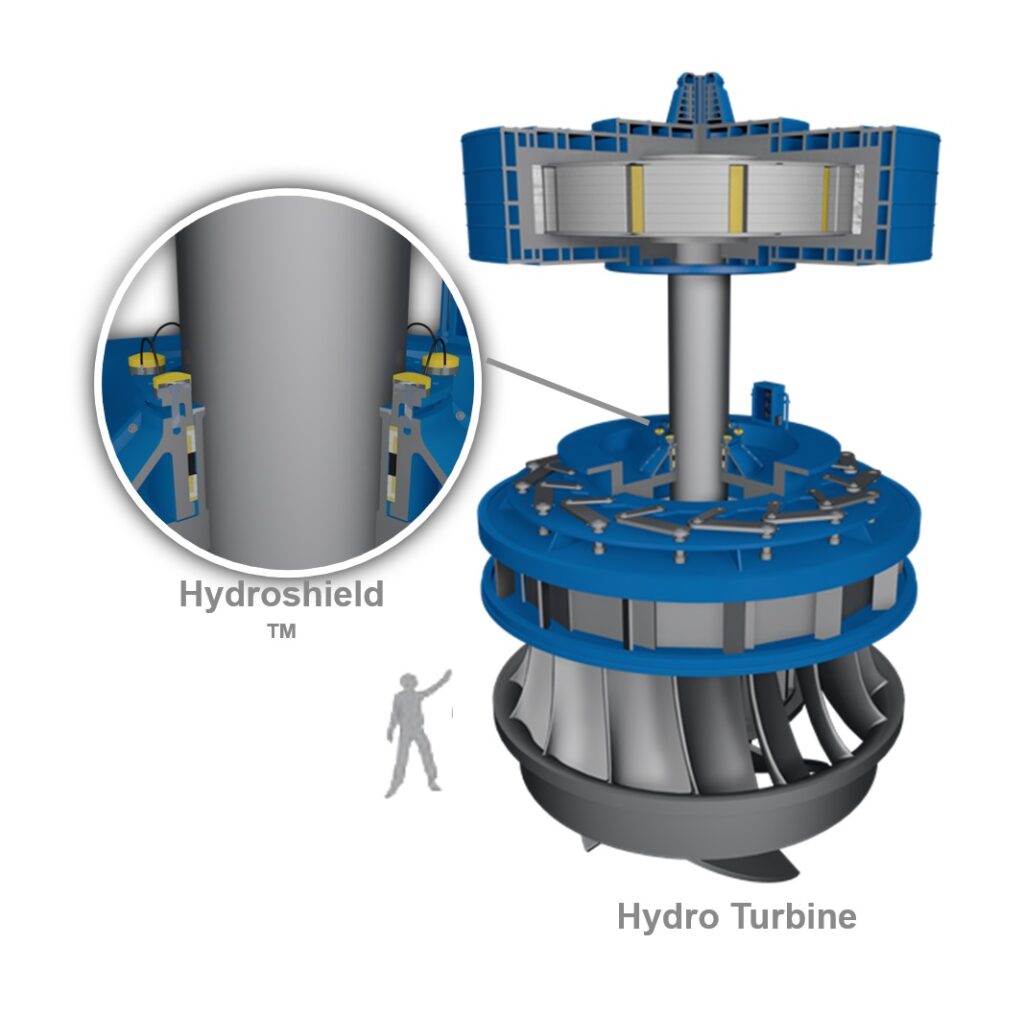
    A.W. Chesterton Co. has developed a patented technology that eliminates the problems normally associated with compression packing. This technology is the Hydroshield™ system featuring Chesterton’s AMPS™ technology (Automated Mechanical Packing System).

    Hydroshield™ consists of pneumatic actuators located on the packing gland that maintain a constant force on the packing to keep the leakage level constant. As the packing loses lubricant and volume through wear, the system automatically adjusts. The system consists of several components:

    – The compression packing

    – The pneumatic actuators

    – The interconnecting pipework

    – A control unit

    Figure 4: Chesterton Hydroshield TM system

    The gas pressure is supplied by plant air or a gas cylinder. The control unit consists of at least a pressure regulator, but may optionally include a buffer tank to protect against loss of plant air pressure, and other auxiliary equipment to monitor and guard air pressure. The actuators are specifically designed to provide the force required to seal the packing in the specific stuffing box configuration. The pressure regulator is used to fine tune the pressure and keep the leak rate at an acceptable level. The air consumption of the system is very low. Typically 15 litres of air is used during the installation and initial adjustment of the packing and system. During normal operation the air consumption is close to zero. The gas pressure is only used to maintain a force on the packing.

    Figure 5: Pneumatic Diagram

    The system is constructed from 316SS with Viton O-rings and a polypropylene dust cap. Materials can be modified to suit application requirements.

    2.1 Technology comparison

    Alternative technologies can be used to seal turbine shafts effectively. Radial Segmented seals and Mechanical Seals are alternative technologies that are successfully applied. The table below shows a comparison between technologies.

    Hydroshield™Radial Segmented SealsMechanical Seals
    SizeNo limitUp to 2000mm (80”)Typically 760 mm (30”), Split seal up to 915 mm (36”)
    PriceMost economical (when upgrading from compression packing)ExpensiveMost expensive
    Pressure ratingUp to 35 bar (500 psig)Around 10 barUp to 7 bar
    AdaptabilityAdjusts to system pressure changesNoneNone
    Flush conditionNo special filtration system requiredSpecial water FiltrationMaximal particle size 30-50 micron
    Water usage0.02 L/Min Achievable20 – 90 l/minDependent on equipment
    Smart ControlRemote control and monitoring (Connect) add-ons availableNoneNone
    InstallationEasiest to installDifficultDifficult
    Table 1: Sealing Technology Comparison

    2.2 Sucessful Case history with Chesterton Hydroshield™

    An example of an application is the refurbishment of a 100 year old Dominion Engineering turbine in Canada. The turbine shaft was sealed with compression packing and it was not possible to upgrade the system to an alternative sealing method. Bryson Generating Station is a run-of-river facility located on the Ottawa River. The Bryson station is owned by Hydro-Québec. Commissioned in 1924, it has a capacity of 61 MW with 3 units.

    The major problem with the compression packing was that the area where the packing gland was located was subject to flooding and it was unsafe to retighten the packing gland while the turbine was in operation. The existing packing sealing system was weak and leaking heavily, causing unnecessary stoppages for maintenance. As a result, the turbine had to be stopped to retighten the packing. This resulted in costly shutdowns. The alternative was significant leakage over an extended period of time. The turbine shaft was 29″ (737mm) in diameter.

    A Hydroshield™ system was installed on the packing gland in combination with 5 rings of DualPac 2212 compression packing. Hydro-Quebec certifies that the system meets the technical requirements. The system has been in operation since the beginning of 2021 and the packing is replaced preventively during regular outages. The customer has also upgraded the 2 other turbines with the same system.

    Hydroshield TM Installation at Bryson Power Station

    3. Conclusion

    Compression packing is a sealing method that is still widely used in hydro turbine shaft applications. While compression packing has some advantages, it also has some disadvantages. The main one is that compression packing on rotating shafts is maintenance intensive. Chesterton has developed a system that eliminates maintenance to a great extent on packed glands and extends the life of the packing. The system reduces the operating cost of the turbine, increases reliability, and increases worker safety. The system has been successfully installed in several turbine applications around the world.

    Do you have a specific question? Please ask our Expert Desk.

    You can also make a preliminary selection using our product selector. Our product consultants will gladly assist you in selecting the ideal product for your application.


    The Author:

    Hans E. Dekker graduated as a Bachelor of Engineering at the Saxion Polytechnic in Enschede in the Netherlands. He is working in the sealing industry for over 25 years in various functions in Engineering and Marketing. He is the Product Line Manager in Europe, Middle East and Africa for Compression Packing and Gaskets for the A.W. Chesterton Company. Hans is an active member of the European Sealing Association.